The Nettle Dress: Nature, Grief and the Threads That Connect Us
Representatives from The Centre for Reconciliation attended a screening of The Nettle Dress on 1 October, reflecting on its moving themes of love, loss, creativity and connection with nature.
The film follows textile artist Allan Brown’s seven-year journey to make a dress from locally gathered stinging nettles. Through the changing seasons, an ordinary plant becomes fine thread, woven cloth and finally a garment carrying an extraordinary personal story.
Stories held in the thread
The process begins with collecting nettles, preparing their stems and carefully separating the fibres. These are spun into thread and woven into cloth before the material is cut and sewn. Every stage requires patience, learning and many hours of work.
Watching this unfold encouraged us to consider the true value of clothing: the natural resources, human effort and time held within something we wear.
Alongside the making of the dress, the film follows Allan through his wife Alex’s illness and death. He describes how spinning helped ease his anxiety and became a source of comfort through grief. The work gave him something to return to when life was painful and uncertain.
His experiences become inseparable from the making process. Each length of thread carries time spent remembering, struggling, learning and continuing.
A spiritual connection with nature
There is a deeply spiritual quality to the attention Allan gives to his work. The repeated movements of spinning may resonate with prayer, meditation or mindful attention—a way of finding stillness while remaining engaged with the world.
People of different religions and beliefs will interpret this differently. Some may recognise a spiritual practice; others may connect with the comfort of creativity or the sense of belonging found in nature. The film makes room for these different responses.
One particularly memorable moment is seeing the finished dress worn in the woodland. The nettles return to the landscape from which they came, transformed through years of human care. It is a beautiful expression of interconnectedness between the earth, the maker and the person wearing the cloth.
The film also invites us to reflect on our environmental responsibilities. Understanding where materials come from and appreciating the effort involved in making them can encourage us to treat clothing—and the natural world—with greater care.
Shared experiences, meaningful conversations
At TCfR, we bring people of different religions and beliefs together to listen, learn and build relationships. Stories such as Allan’s offer a meaningful starting point for those conversations.
Love, loss and the search for peace touch lives across communities. Although our beliefs and experiences differ, we can recognise something of ourselves in another person’s story. Listening with care can deepen that understanding.
The Nettle Dress encouraged us to slow down and notice the relationships held within everyday things. It also offered a moving reflection on how small actions, repeated patiently over time, can help someone live through loss and create something meaningful.
Our thanks to Kerry Gibson for organising the screening and creating this opportunity to come together, watch and reflect.
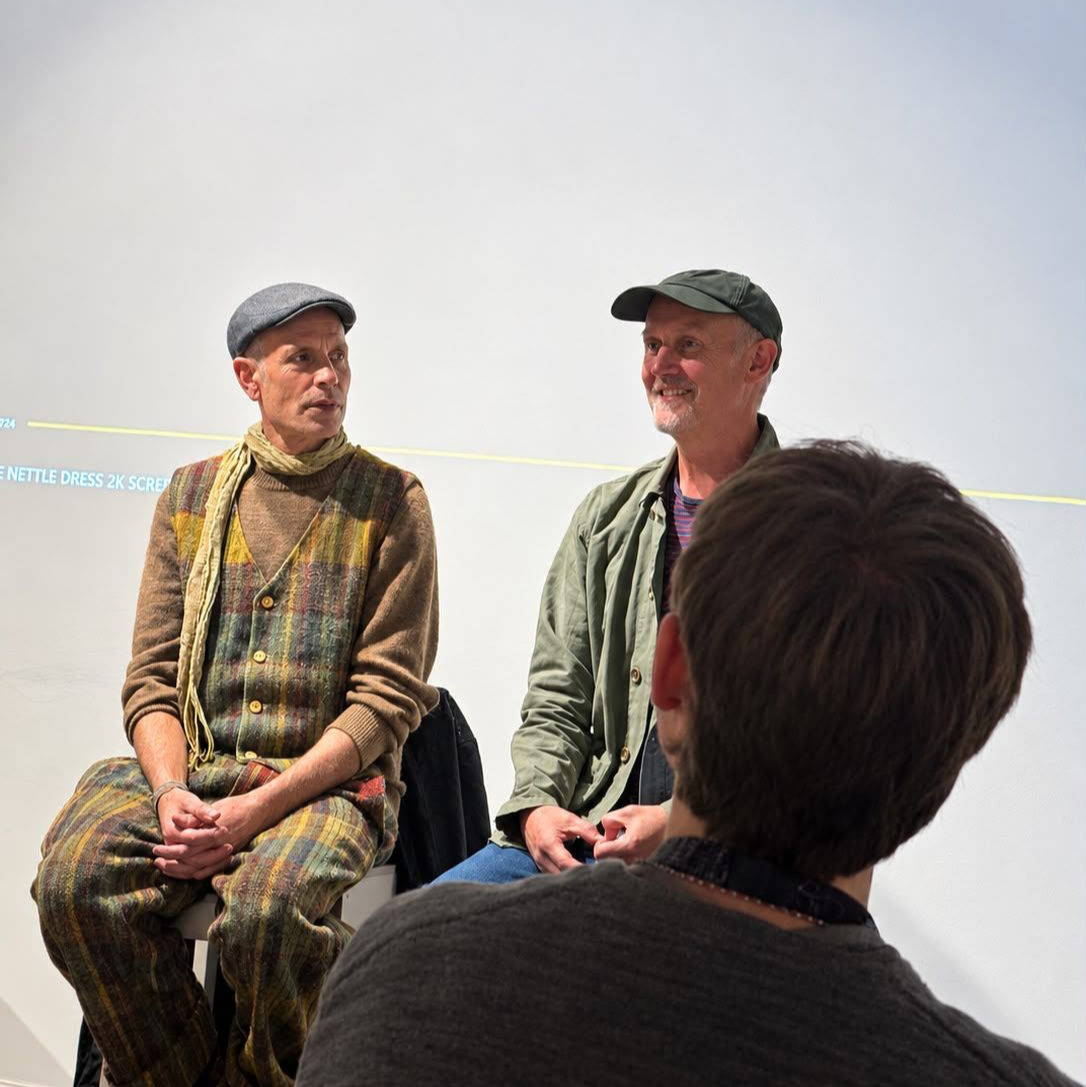
Textile artist Allan Brown (left) and filmmaker and director Dylan Howitt (right) during the conversation and Q&A following the screening of The Nettle Dress.