Holocaust Memorial Day Commemoration at Lincoln Cathedral Monday
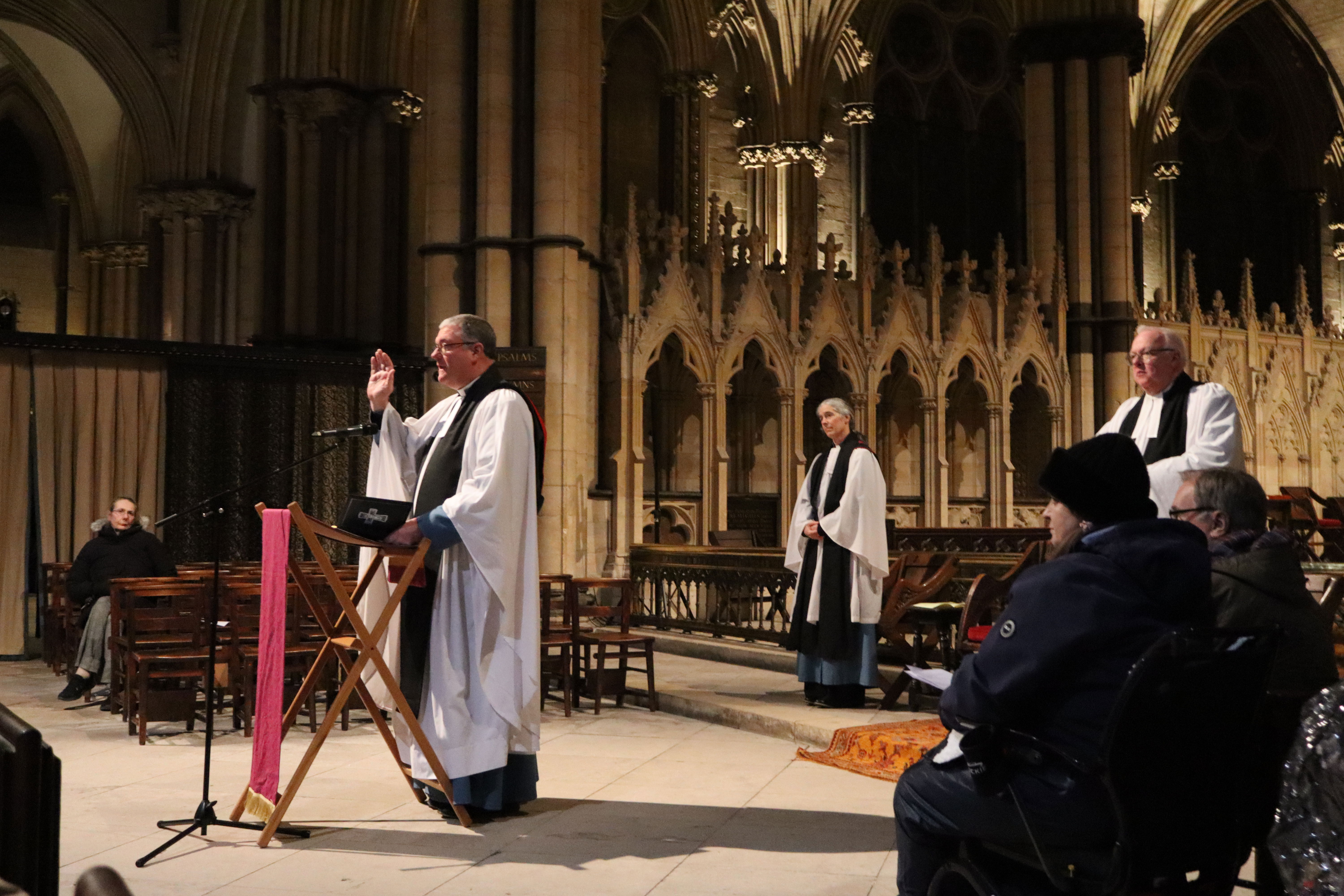
On Monday 26 January, at Lincoln Cathedral, we gathered on the eve of Holocaust Memorial Day to remember — together. People of all faiths and none, came in shared witness, holding space for memory, grief, and hope.
We remembered the six million Jewish men, women, and children murdered in the Holocaust, and we honoured the victims of all subsequent genocides. We also held in our hearts those who are suffering today — through war, persecution, displacement, and violence — recognising that remembrance must speak not only to the past, but also to the present.
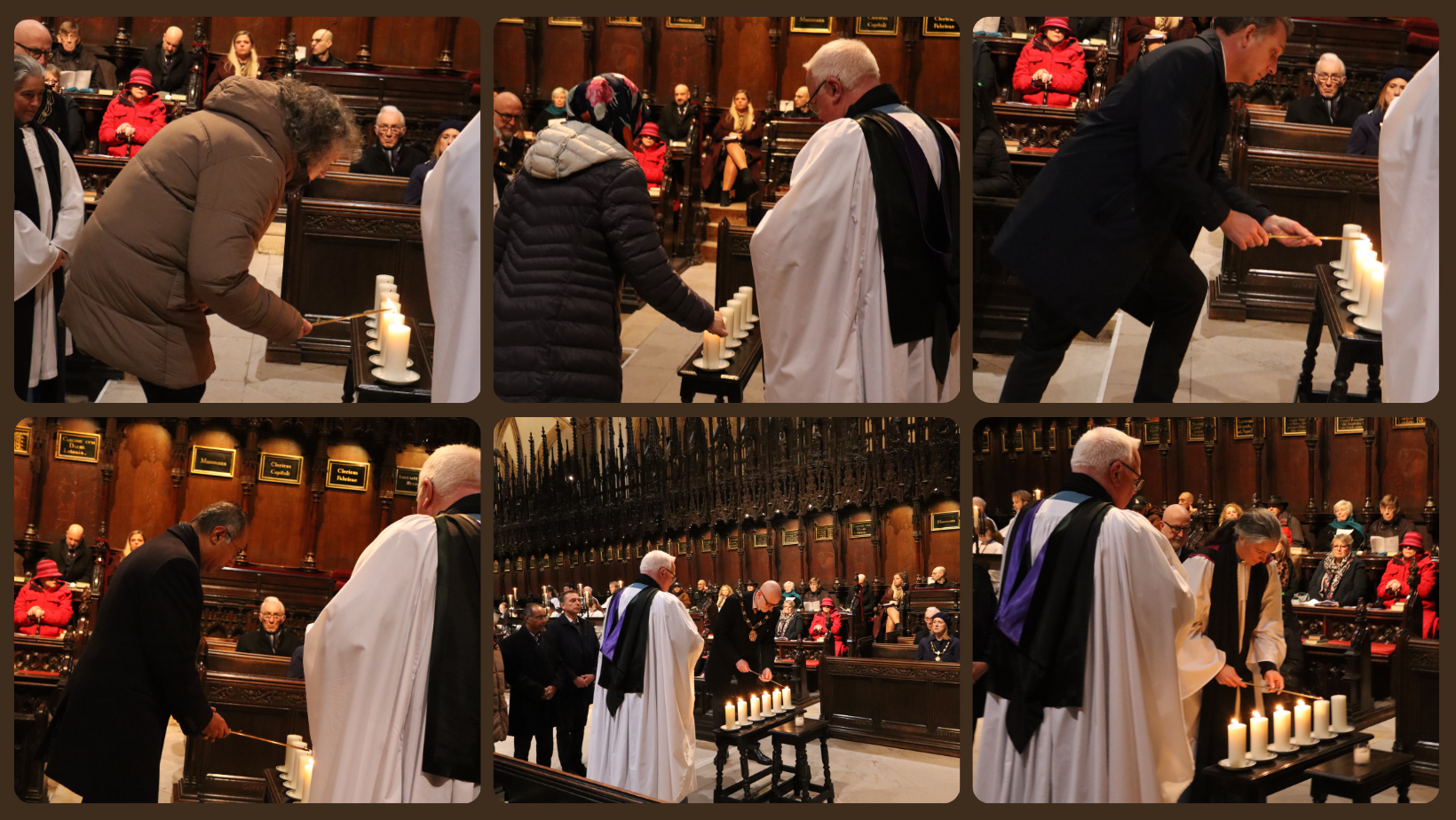
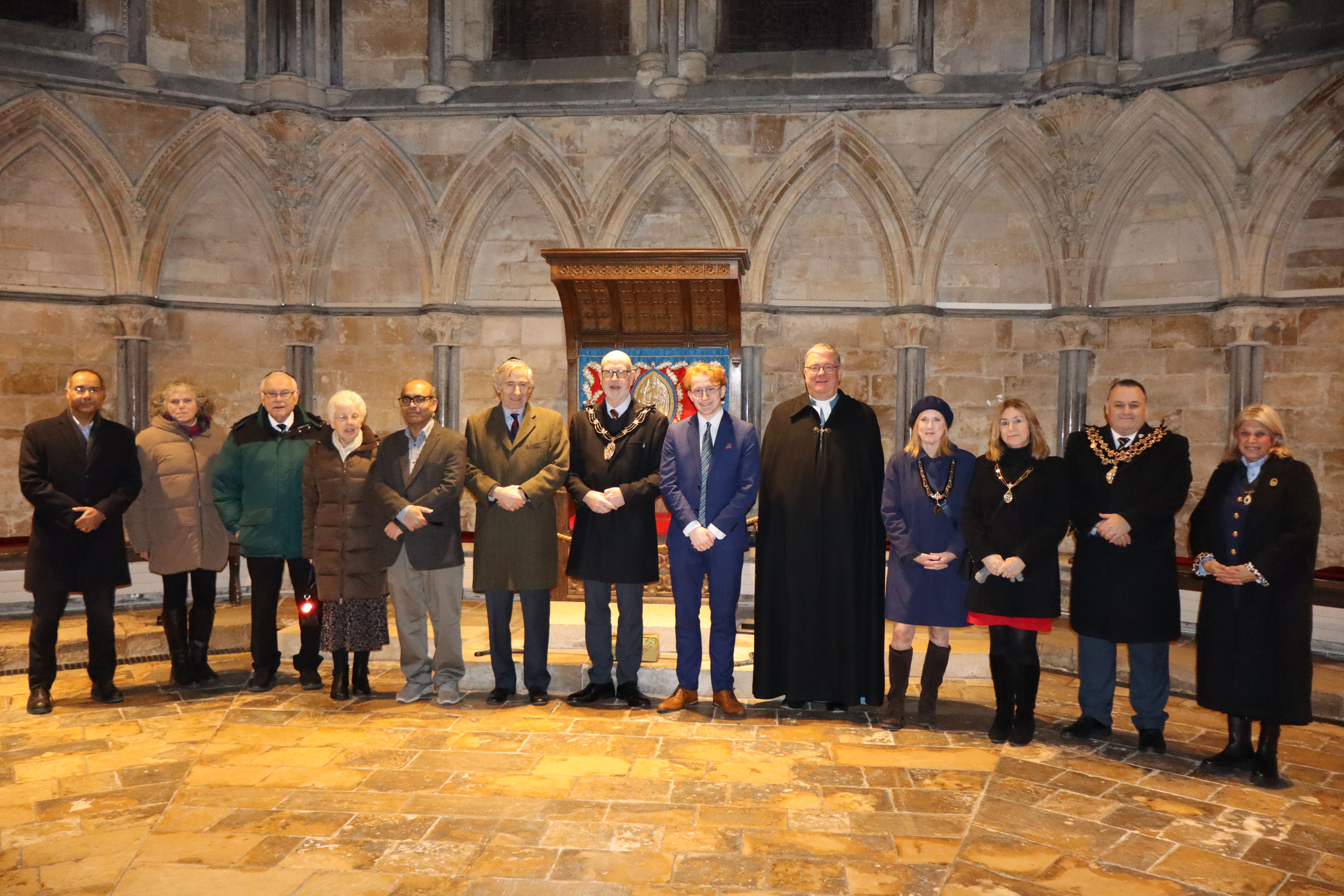
A deeply moving moment in the service was the lighting of six candles. These were lit by representatives of different faith communities, including the Mayor of Lincoln, each flame honouring lives lost in the Holocaust and in subsequent genocides. Together, they stood as a visible commitment to remembrance, dignity, and shared responsibility.
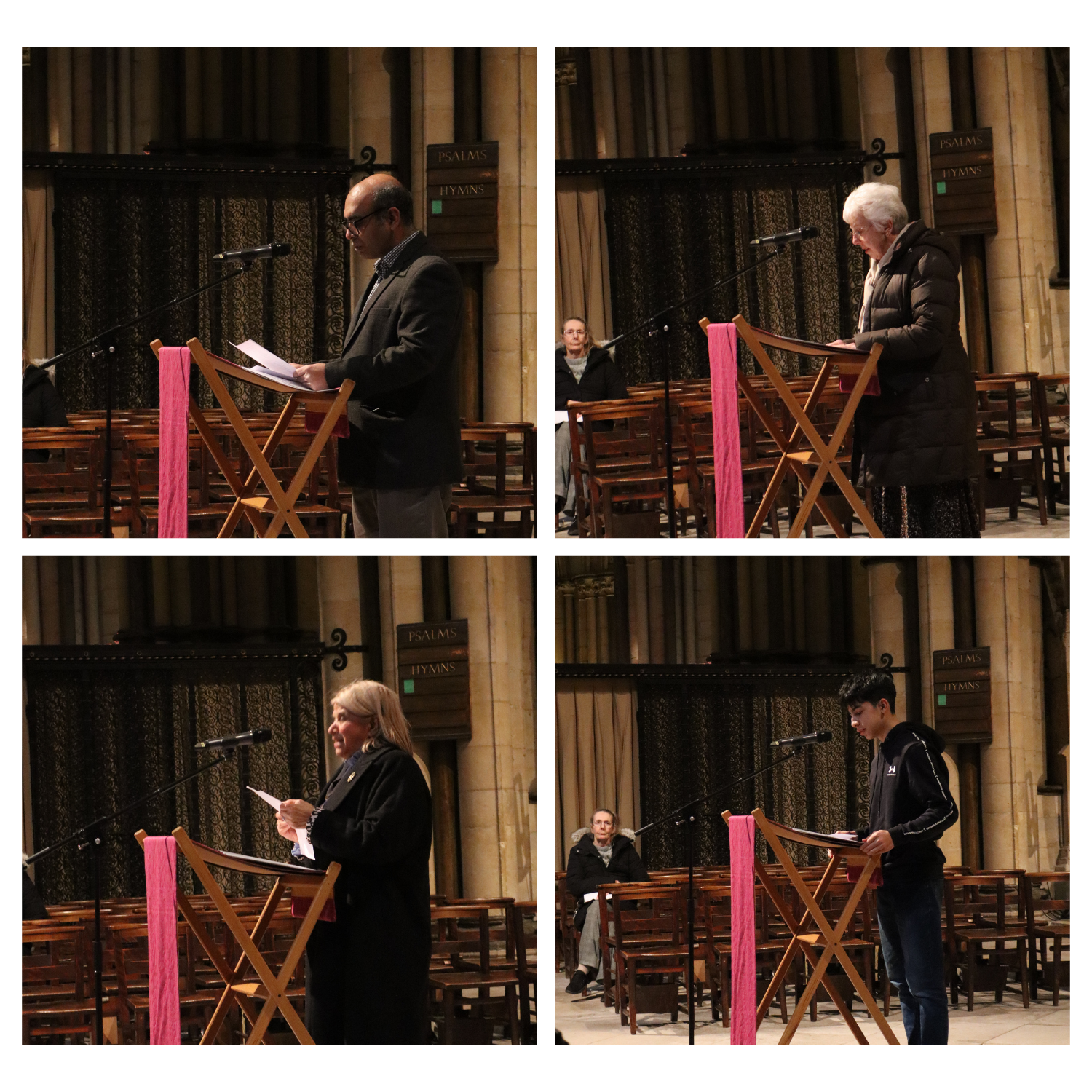
Four testimonies were read, giving voice to individual experiences of loss, courage, and survival. Heard together and across generations, these words reminded us that behind every statistic is a human life — with a story that deserves to be remembered.
Music, scripture, silence, and reflection — led beautifully by the Cathedral Choir — created a space where listening itself became an act of peace. The theme Bridging Generations was embodied through interfaith solidarity, the sharing of stories, and the recognition that memory must lead to compassion and action.
With gratitude, we thank Lincoln Cathedral for hosting this commemoration, and Simon Jones, Dean of Lincoln Cathedral, for his leadership and warm welcome. We also thank all who participated — speakers, readers, faith leaders, musicians, organisers, interfaith networks — and everyone who attended and bore witness by being present.
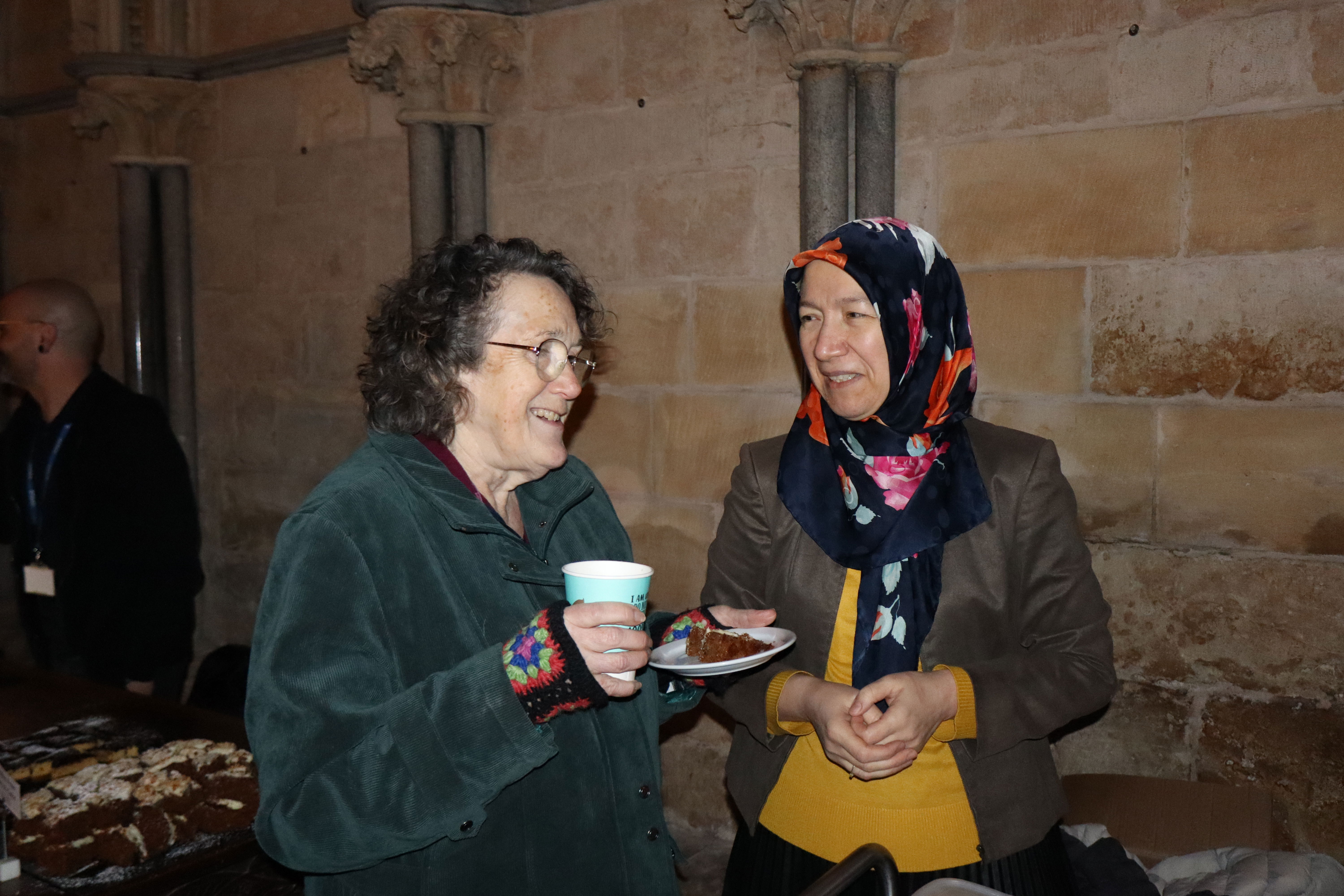
Our thanks extend to those who shared hospitality afterwards, and especially to Hilal Demirbas for preparing Noah’s Pudding, offered as a symbol of care, remembrance, and hope.
This commemoration was an act of remembrance for all who have suffered through genocide, an act of compassion for those suffering now, and a shared commitment to peace — across faiths, across generations, and across our common humanity.