New multi-faith chaplaincy module builds on collaboration with The Centre for Reconciliation
Lincoln Bishop University’s Theology, Philosophy and Ethics team has announced the validation of a new 30-credit Multi-Faith Chaplaincy module, designed to prepare students for a diverse and rewarding area of contemporary ministry and public service.
The announcement follows a chaplaincy collaboration between the University and The Centre for Reconciliation (TCfR). Initial discussions between Professor Julian Stern and Subash Chellaiah led to a chaplaincy taster event, followed by a ten-week Developing Chaplaincy course from February to April 2023.
Held at the University under its former name, Bishop Grosseteste University, the course attracted more than 30 regular participants, with 17 attending every session. It brought together university staff, students and chaplains working in agriculture, policing, higher education and other settings. Its success prompted further exploration of accredited chaplaincy study.
In his June 2024 report, Professor Stern described the collaboration as “initially stimulated by – and developed with – The Centre for Reconciliation.”
The new module combines classroom-based learning with optional placement opportunities, giving students practical insight into the role chaplains play across society. Students will explore the history of chaplaincy, the foundations of Chaplaincy Studies, ecumenical and interfaith engagement, and the breadth and complexity of chaplaincy practice in increasingly diverse communities.
Beyond the classroom, students may choose placements arranged through the programme team or pursue opportunities independently. These experiences could take them into hospitals, prisons, schools, civic institutions, rural communities and UK Armed Forces bases.
The module highlights how chaplains offer support and care wherever people face challenge, transition, celebration or crisis.
Prof. Julian Stern, Director of the World Religions and Education Research Unit at Lincoln Bishop University and a board member of TCfR, said:“This chaplaincy course is an important indication of the university’s commitment to practical, professional, community development working across worldviews and religions in a positive way.”
Subash Chellaiah, Founder and Executive Director of The Centre for Reconciliation, said:“Chaplaincy is about listening, caring and being alongside people when they need support. It is a field in which people of all faiths and none can make a valuable contribution.
“If you are a compassionate person who wants to make a difference, chaplaincy could be a path worth exploring. Opportunities span retail, policing, airports, ports and seafarers’ centres, the military, agriculture and rural communities, healthcare, prisons, schools, and further and higher education.
“It is encouraging to see the collaboration we helped initiate develop towards accredited study. We welcome this new module and its potential to inspire people to explore this rewarding work, bringing interfaith understanding and practical care into everyday life.”
The module has been developed with the future of flexible learning in mind, supporting the University’s commitment to lifelong education and responding to the Government’s plans for the Lifelong Learning Entitlement (LLE). As demand grows for modular and professionally relevant study opportunities, it offers a pathway for those seeking to explore chaplaincy academically, professionally or vocationally.
Currently, the module is available exclusively to enrolled Lincoln Bishop University students. The University hopes to make it available as a standalone short course in the future. Further details will be published on its website.
For those curious about chaplaincy, interested in faith and public life, or considering chaplaincy as a vocation, the proposed standalone course could provide a future opportunity to explore the field.
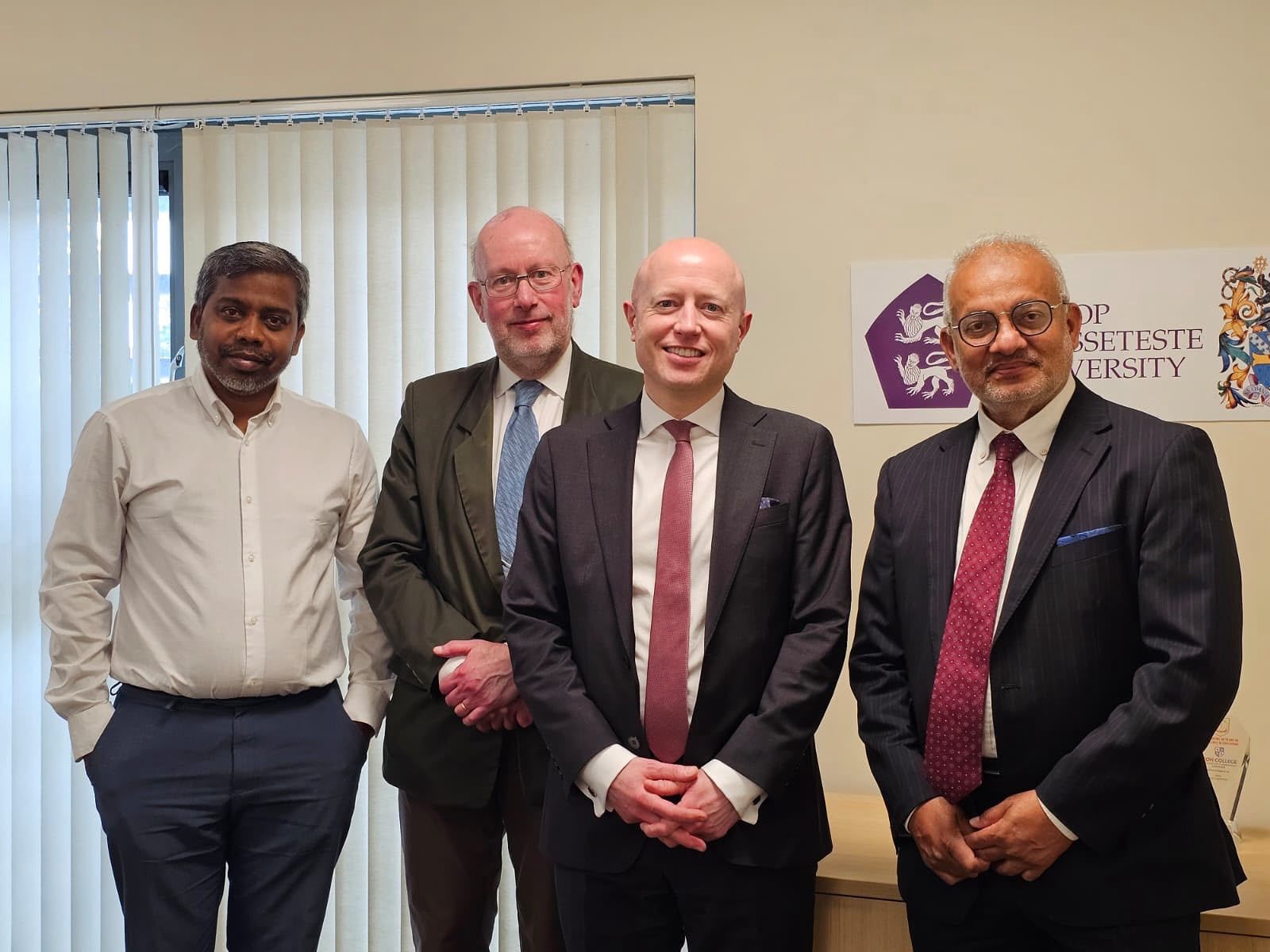
Photo caption: Community consultation on developing chaplaincy education at Bishop Grosseteste University, now Lincoln Bishop University. From left: Subash Chellaiah, Professor Julian Stern, Vice-Chancellor Andrew Gower and Imam Abdul Qureshi.
The career settings mentioned illustrate the breadth of chaplaincy work and do not represent guaranteed placements or employment.
In exceptional circumstances, Lincoln Bishop University reserves the right to make changes to modules, courses or parts of courses, including withdrawing or amending provision where necessary.
Media enquiries
Subash Chellaiah